Infrastructure has outgrown the traditional process of automation. It now spans across clouds, containers and edge environments, scaling in minutes and evolving constantly. Tools such as Puppet were built for predictability. The Progress Chef platform is built for speed, security and scale; helping teams automate confidently without the usual migration pain.
Migrating from Puppet to Chef isn’t a rewrite; it’s modernization. The Chef solution helps you translate your existing configurations into clean, testable and policy-driven automation.
The Chef solution empowers teams to move faster, stay compliant and scale without chaos, transforming infrastructure from a merely maintained state to a well-orchestrated one.
Modernization isn’t always about starting over. It’s about moving forward confidently.
1. Tailored Planning
The process begins with a thorough analysis of existing Puppet modules, including manifests, templates and other data, to assess resource definitions, dependencies, data hierarchies and environment configurations.
This analysis forms the foundation for creating a detailed migration plan that maps Puppet constructs to their equivalent Chef resources, attributes and data models, maintaining functional parity and configuration consistency throughout the transition.
A structured migration approach helps maintain consistency and quality by:
- Applying linting and testing to validate migrated code
- Preserving functional intent during conversion
- Providing a repeatable process for code transformation
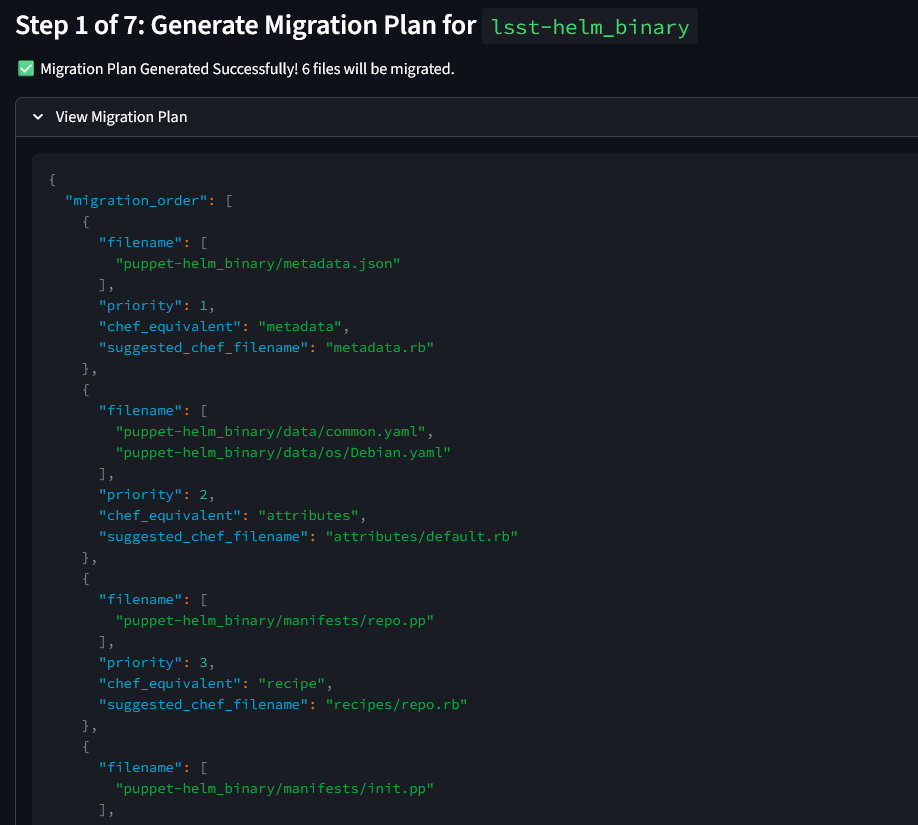
Figure 1: Migration Plan
2. Intelligent Mapping and Automated Transformation to Execute Migration Plan
In this phase, Puppet configuration constructs are mapped and translated into the Chef domain model. Core Puppet resources, such as file, package, exec and service, are intelligently mapped to their corresponding Chef resources, maintaining state and behavior consistency.
Custom classes and defined types within Puppet are refactored into Chef recipes or custom resources, aligning with the Chef procedural model.
Hiera data from Puppet is systematically converted into Chef attributes, preserving data-driven logic and maintaining consistent environment-specific configurations across all nodes. This intelligent mapping preserves semantic integrity, confirming that resource dependencies, conditional logic and ordering in Puppet manifests are accurately carried over into Chef execution context.
The advantages of such a mapping include:
- Migrating infrastructure components to their Chef equivalents, preserving structural intent where possible
- Preserving intent and data hierarchies from the original manifests
- Establishing a foundation for clean and testable Chef cookbooks
- Accelerating validation and reducing manual intervention
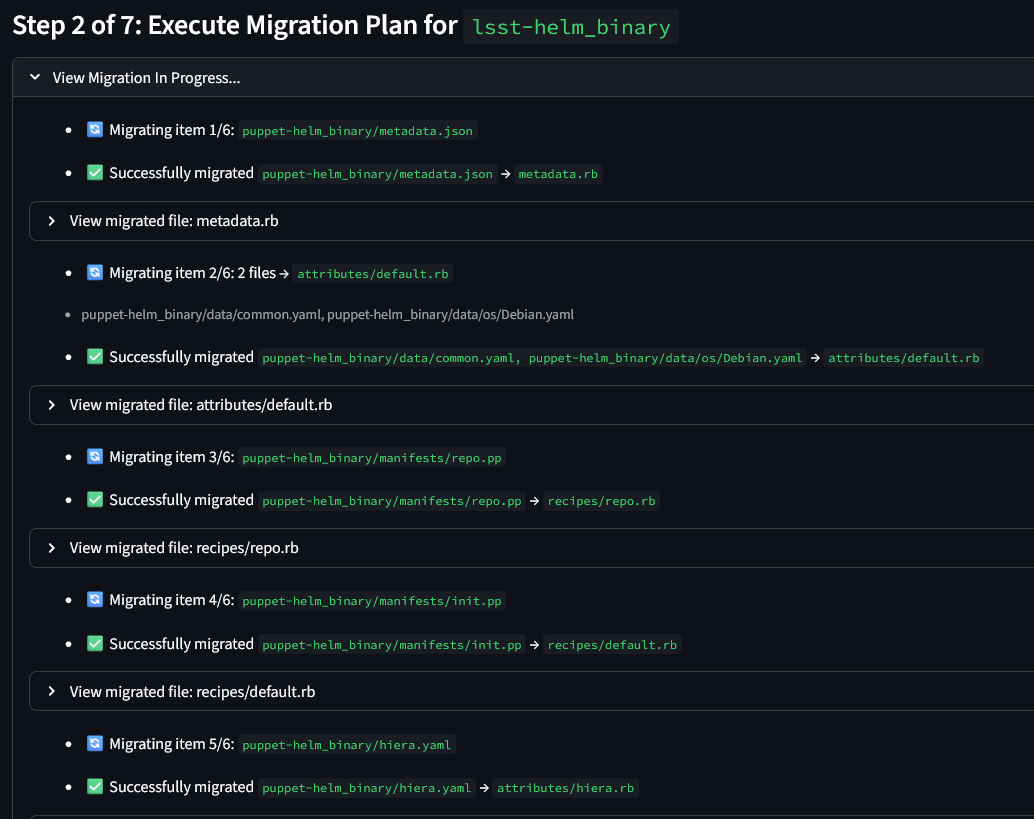
Figure 2: Execute: Migration Plan
3. Automated Transformation into Chef Cookbooks
Automated transformation operationalizes the migration plan using the Chef transformation engine. Puppet manifests are programmatically restructured into Chef cookbooks, with the framework translating resource logic, metadata and templates while preserving the intent and dependencies defined in the original configuration.
The system automatically reorganizes directory structures, generates attribute files and converts embedded templates (.erb or .epp) into Chef-compatible templates. It maintains resource ordering and respects conditional logic throughout the migration.
Automated transformation identifies deprecated constructs and replaces them with modern Chef equivalents, reducing manual intervention and aligning the resulting codebase with current best practices.
Advantages:
- Converts legacy manifests into modular, production-ready Chef cookbooks
- Maintains logic integrity, dependencies and relationships across resources
- Reduces manual rewrite errors and accelerates code modernization
- Aligns output with Chef DSL and coding standards for future scalability
- Delivers clean, maintainable Chef cookbooks that integrate into Policy as Code workflows
- Enables versioning and governance through Chef best practices
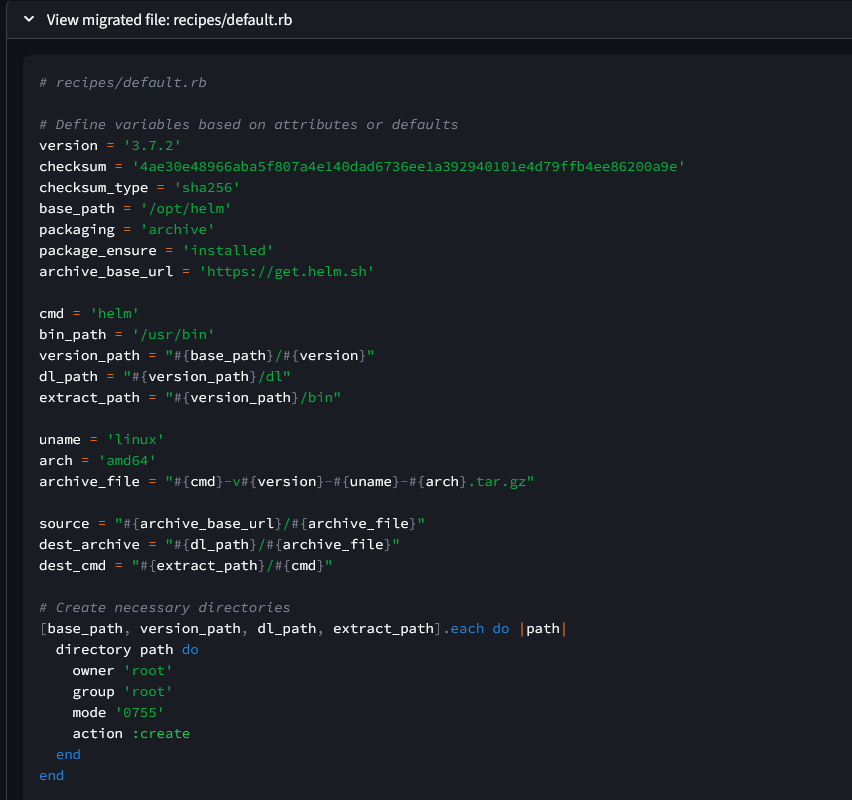
Figure 3: Migration Successful
4. Quality Checks with Cookstyle
Once the Chef cookbooks are generated, they undergo a comprehensive validation process using Cookstyle. The integrated linting and style analysis engine of Cookstyle enforces modern Ruby and Chef Infra coding standards, it helps the migrated code remain syntactically correct and aligned with the best practices for readability, maintainability and performance.
It automatically detects deprecated syntax, unused attributes and formatting inconsistencies, providing actionable suggestions or auto-corrections wherever applicable.
This step helps the resulting cookbooks adhere to recommended coding practices by identifying deprecated features and common issues, thereby assisting in maintaining code quality and compatibility.
Advantages:
- Maintains code quality and adherence to Chef Infra standards
- Detects and remediates deprecated or noncompliant syntax
- Improves long-term maintainability and readability of cookbooks
- Reduces technical debt and accelerates review cycles
- Provides migrated automation assets that reduce manual effort while requiring testing before production use
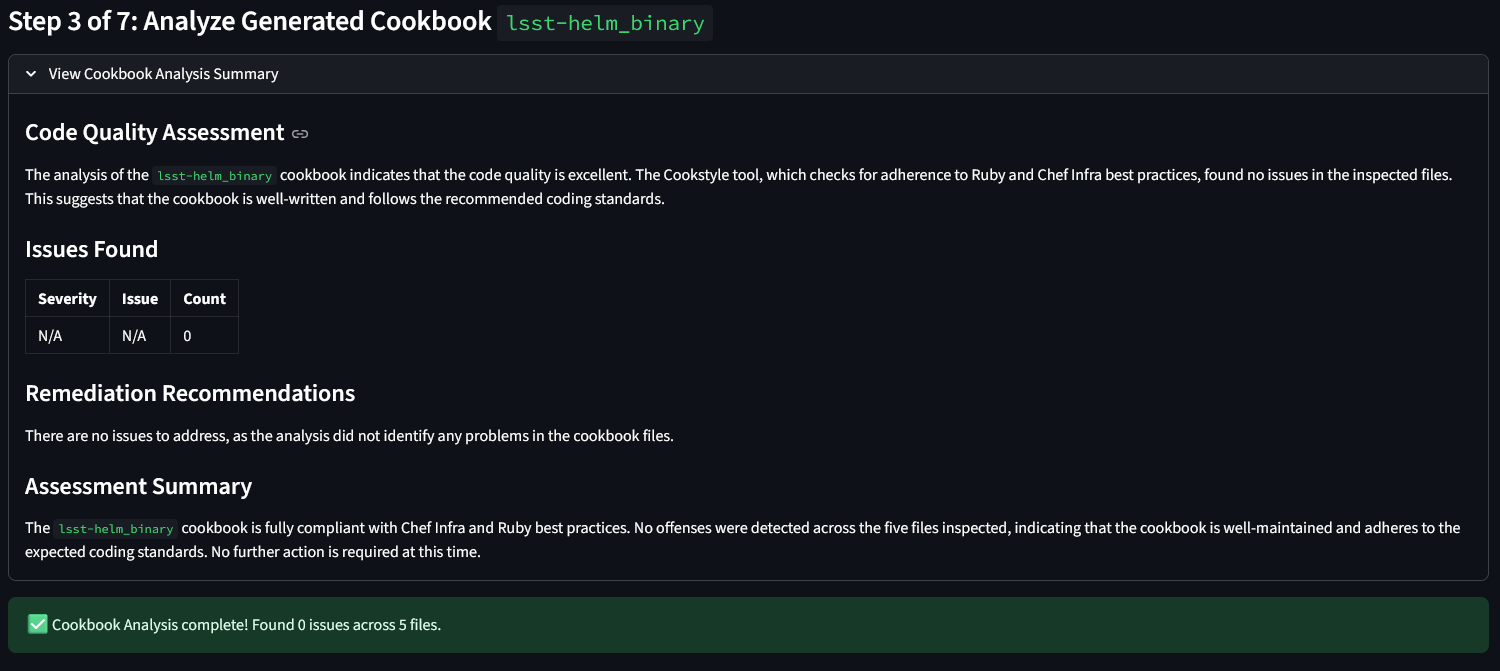
Figure 4: Cookbook Analysis Summary
5. Expert Review
Though automation accelerates the migration, it is human expertise that maintains its precision. Once Cookstyle validations are complete, Chef engineers conduct an in-depth review of the migrated cookbooks to verify security posture, performance efficiency and adherence to Chef Infra and DevSecOps best practices.
This stage focuses on validating configuration logic, optimizing resource usage and maintaining scalability across heterogeneous environments. Expert reviewers assess compliance with enterprise governance policies, remediate potential bottlenecks and refine design patterns for better maintainability and resilience.
Advantages:
- Guarantees enterprise-grade reliability and security
- Validates functional integrity and operational efficiency
- Optimizes cookbooks for scalability and performance
- Aligns automation with organizational compliance standards
- Enables a production-ready and high-quality migration outcome
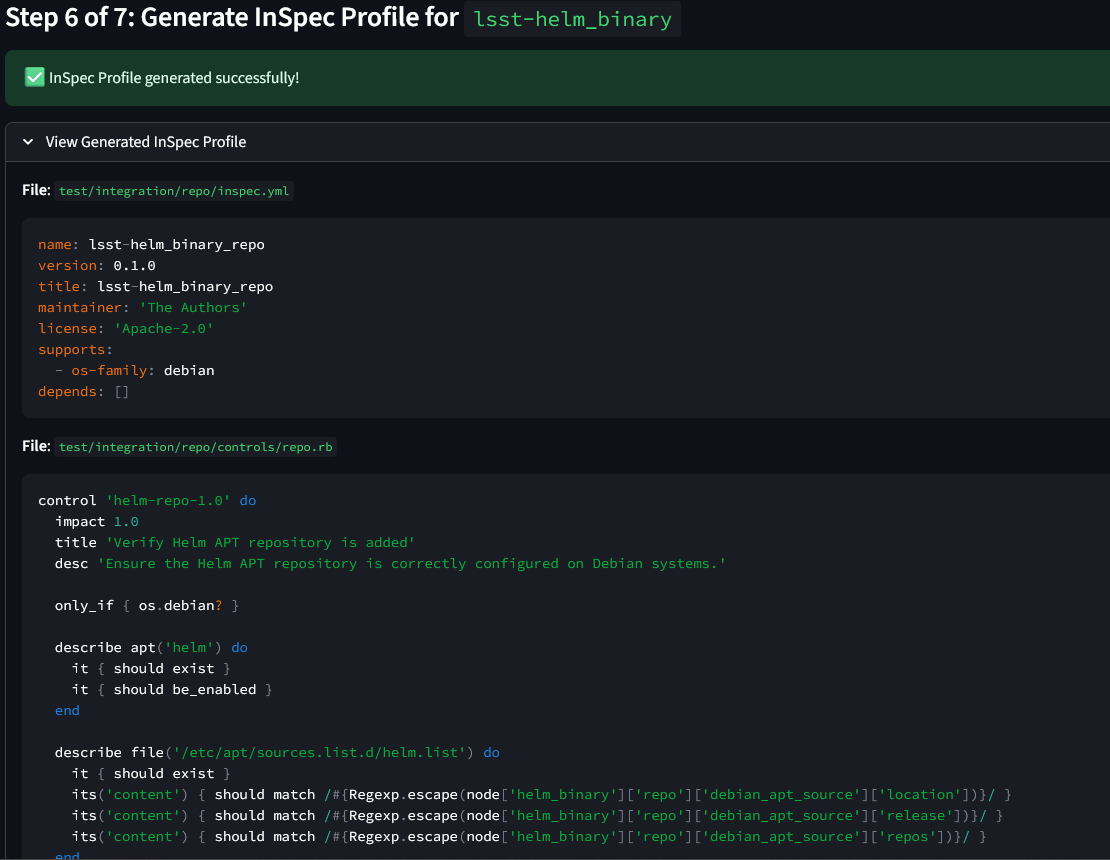
Figure 5: Generated InSpec Profile
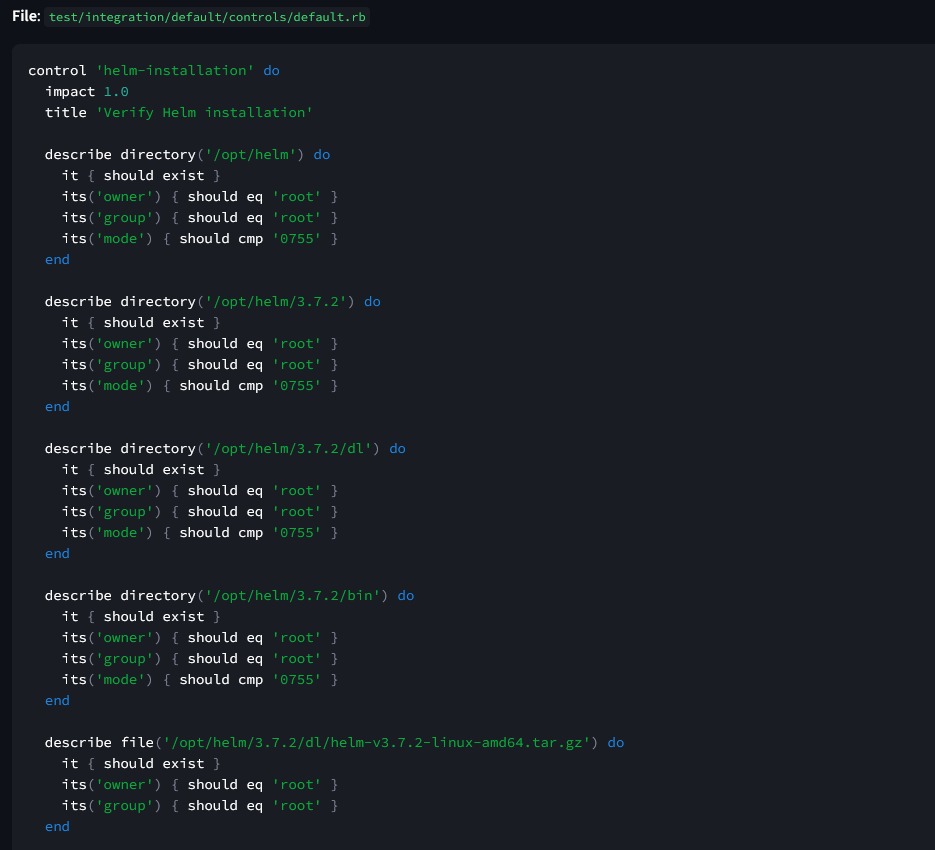
Figure 6: Generated InSpec Profile
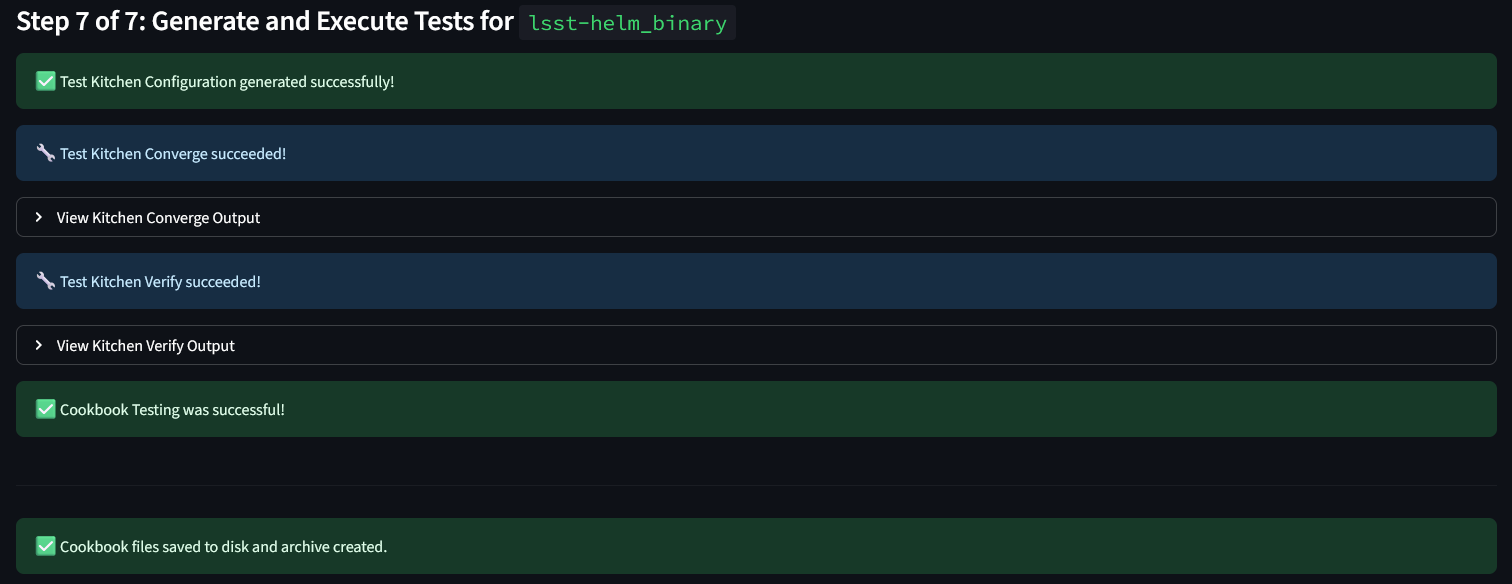
Figure 7: Generated InSpec Profile
6. Functional Testing with InSpec
The migration process automatically generates InSpec tests based on the execution logic of the migrated Chef cookbook, provided that the converted code functions as expected. These tests validate functional parity by verifying that each migrated resource, package, service, template and configuration performs exactly as defined in the legacy environment.
The Chef InSpec compliance-as-code approach provides more than just functional validation. It enables automated verification of system states before production rollout. This step creates a seamless bridge between infrastructure testing and compliance assurance, helping teams detect inconsistencies early and maintain end-to-end confidence in their migration outcomes.
Advantages:
- Validates infrastructure functionality and compliance pre-deployment
- Detects early misconfigurations, reducing rollback risk
- Automates continuous compliance testing using InSpec controls
- Builds trust in migration quality before production rollout
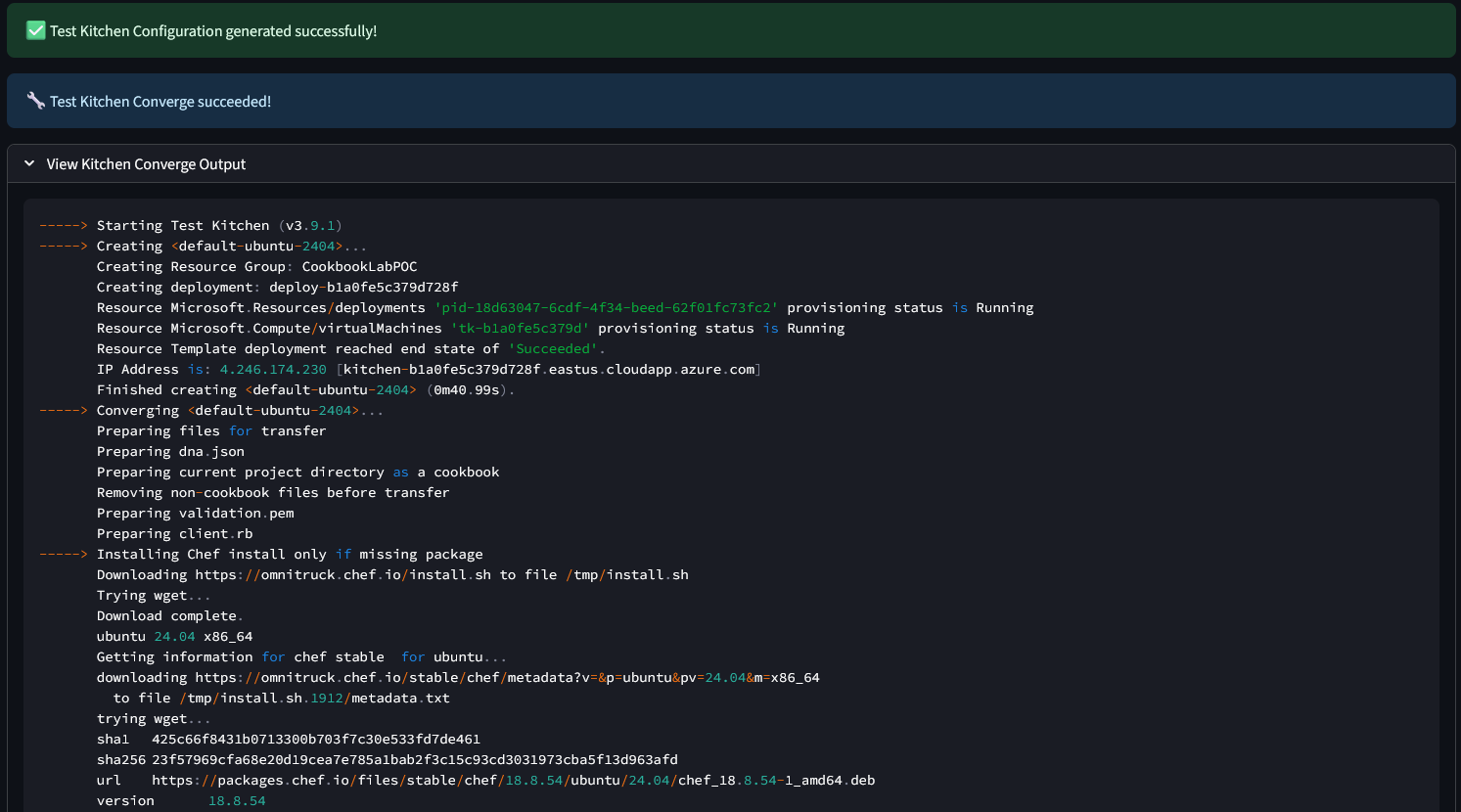
Figure 8: Completion of Test Generation and Execution
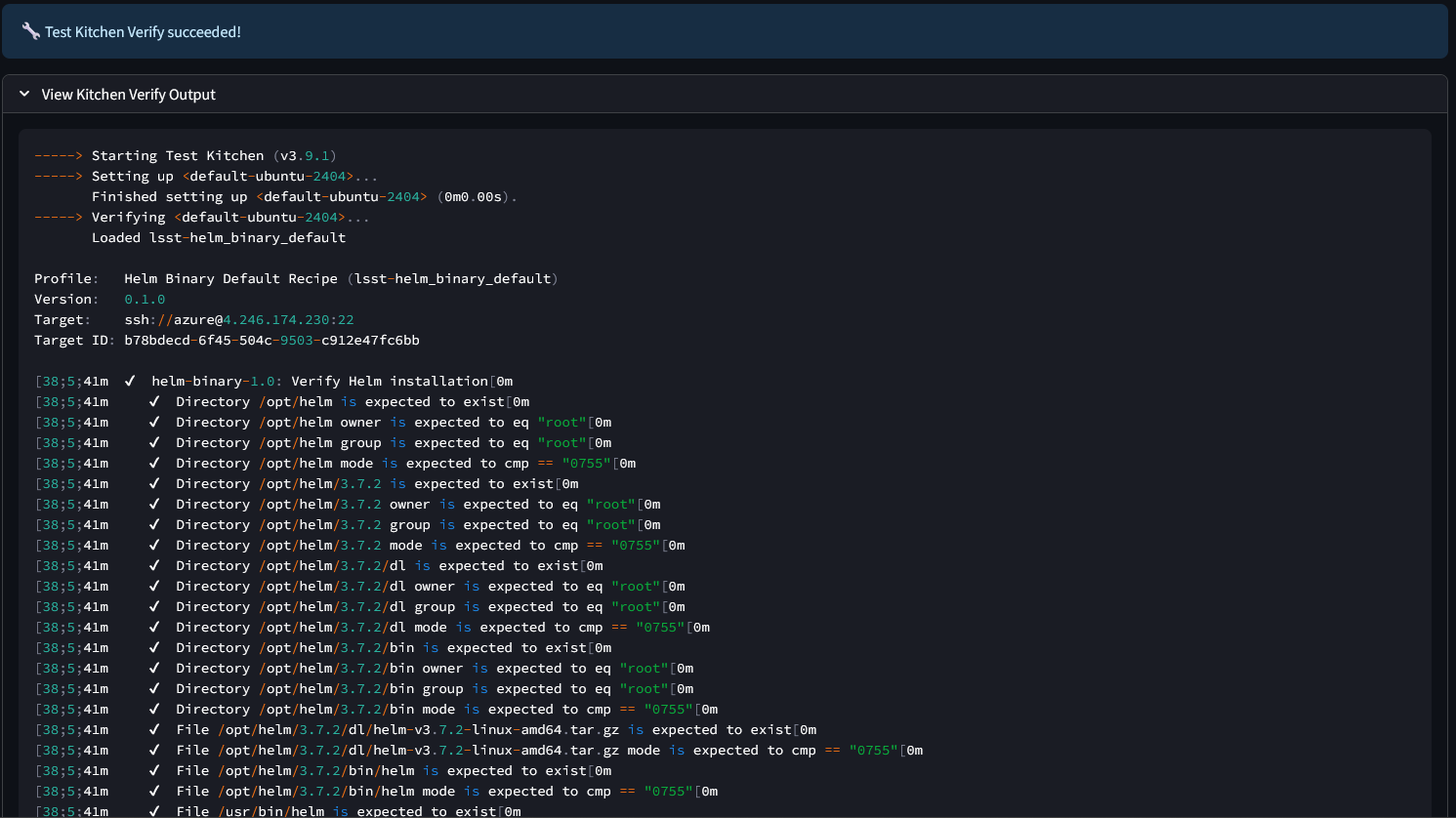
Figure 9: Successful Test Kitchen Configuration Output
7. End-to-End Validation with Test Kitchen
The final stage of the migration process occurs in Test Kitchen, a sandboxed testing environment within Chef, designed for end-to-end validation. Here, the migrated cookbooks are deployed on isolated test instances, allowing teams to execute InSpec tests, validate system behavior and fine-tune configurations in a controlled setup before any production rollout.
Test Kitchen is designed to replicate production-like conditions by supporting multiple platforms and configurations. In this setup, it currently runs tests against a single OS image, providing detailed logs and results for that environment.
Advantages:
- Enables pre-production validation in a safe and isolated environment
- Maintains performance and reliability for cookbooks across multiple platforms
- Minimizes deployment risks and unexpected production issues
- Provides complete traceability through detailed test logs
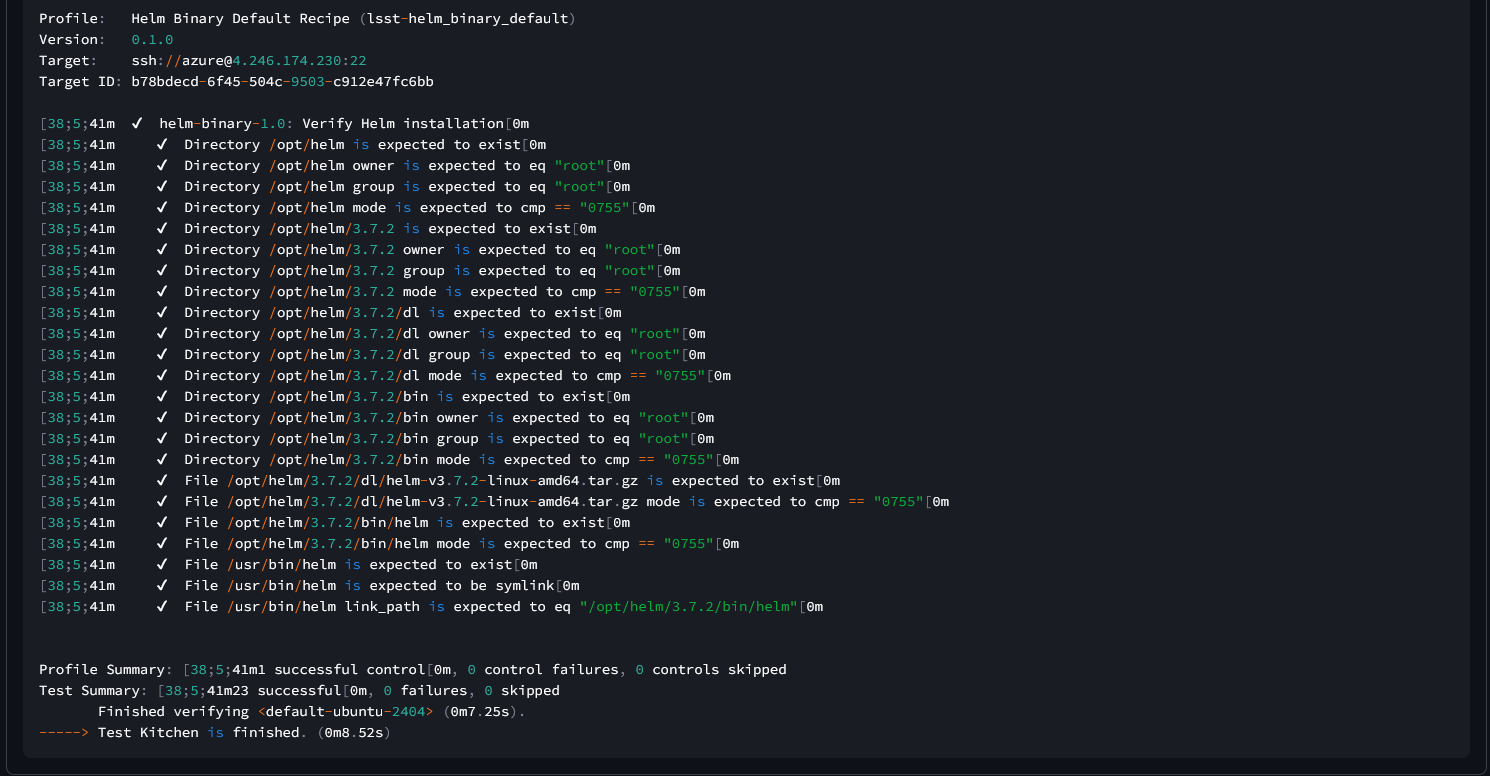
Figure 10: Test Kitchen Verification Step Passe
The migrated cookbook can be downloaded.
Results That Matter
A successful migration focuses on accurately converting existing Puppet code to its Chef equivalent, while maintaining quality through the use of linting and testing tools. This approach preserves functionality while aligning with Chef standards.
From Migration to Modernization
Migrating to Chef is a move toward intelligent automation, transforming the way organizations design, manage and scale their infrastructure. With the Chef solution, DevOps teams can:
- Generate basic InSpec tests alongside the migrated Chef code to support validation and quality checks
- Achieve unified visibility with Chef Automate, creating a single source of operational truth
- Scale confidently across hybrid and multi-cloud environments with consistency and control
The Chef solution turns infrastructure into a living system; continuously improving, auditable and built for what comes next.
The Road Ahead
Moving from Puppet to Chef represents a thoughtful step toward lasting agility and innovation. The Chef solution enables teams to modernize with confidence, preserving what works today while building a foundation for the future.
Modernization is about progressing with purpose; refining what is proven, improving what can be better and evolving with intent. With Chef, you can turn experience into momentum and structure into scale, helping teams move forward with clarity and control.
As infrastructure continues to evolve, momentum defines leadership. Organizations that take the next step now will shape what comes next, with Chef as a trusted partner every step of the way.
Want to move from Puppet to Chef? Request a Trial Today!